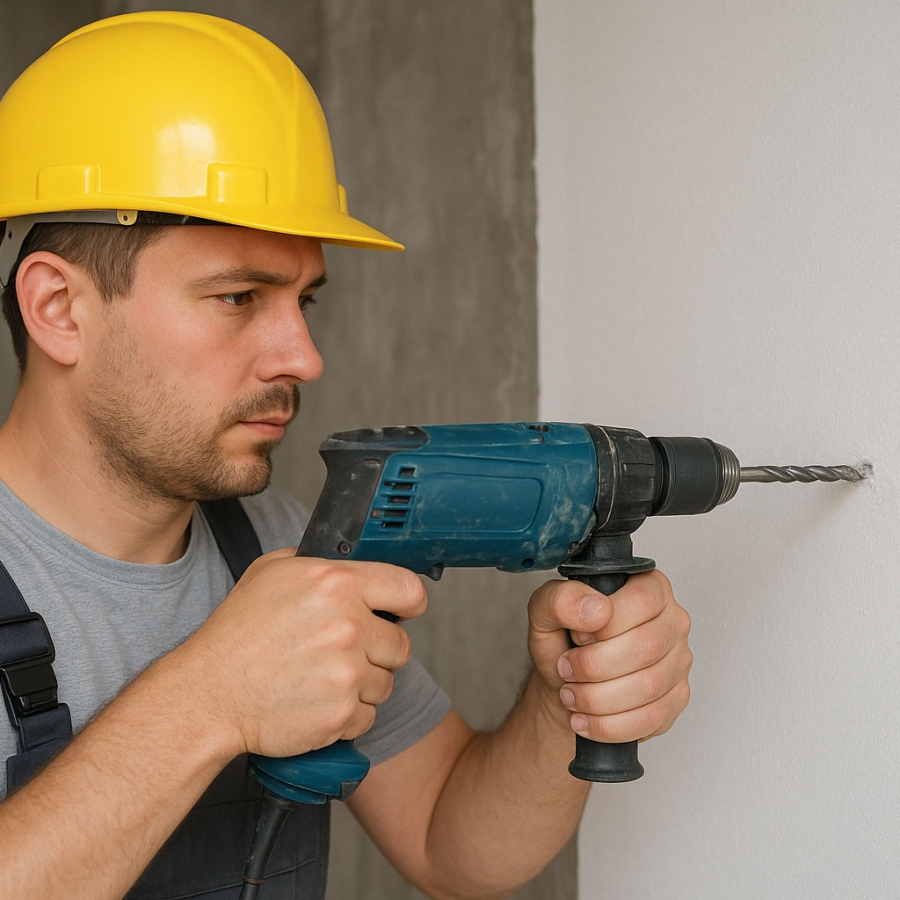
1. Identify your wall type
Before drilling, check whether your wall is drywall, plaster, brick, or concrete. Drywall requires special anchors, while solid walls allow for heavier loads with standard plugs and screws.
2. Always aim for studs (when possible)
For drywall, the safest method is securing the fixture directly into wooden studs. Use a stud finder to locate them. This drastically increases the weight capacity and prevents the fixture from pulling out over time.
3. Use the correct anchors
If studs aren’t available, choose anchors designed for the weight of your item:
-
Toggle bolts — for very heavy objects.
-
Molly bolts — for medium-weight items.
-
Plastic anchors — only for light loads.
Always check the anchor’s weight rating and never exceed it.
4. Measure twice, level once
Mark drill points with precision. Use a spirit level to ensure shelves or brackets are perfectly aligned. A small mistake in the beginning can turn into a crooked installation later.
5. Don’t forget safety checks
Before drilling, confirm there are no electrical wires or pipes behind the wall. Use a multi-scanner tool for peace of mind.
6. Test before loading
After installation, gently pull or push the fixture to ensure it’s firmly attached. Only then place items or hang the load.
Properly mounted fixtures not only look great but also keep your home safe.
If you want everything installed professionally and safely, call our handyman — he’ll take care of any heavy-duty mounting for you.